Clearwater Hit-and-Run Accident Lawyer
Our hit-and-run accident lawyers at Light & Wyatt Law Group help Clearwater accident victims pursue compensation after serious crashes, even when the driver is not immediately identified. You may still have options to recover compensation through uninsured motorist coverage or a targeted investigation.
A hit-and-run accident can leave you injured and without answers. When a driver leaves the scene, it makes your claim more difficult. You may face delays, missing evidence, and pressure from insurance companies. Acting quickly helps preserve key evidence and strengthens your position.
“When a driver flees the scene, it creates uncertainty. A focused legal approach helps uncover the facts and move your claim forward with confidence.”

You need answers and a plan. Call 727-499-9900. for a consultation today with our Clearwater hit-and-run accident lawyer.
- No Fees Until We Win
How Legal Experience Impacts the Outcome of Your Claim
Insurance companies often move quickly after a hit-and-run accident, but their priorities do not always align with yours. Their goal is to limit what they pay, even when you are dealing with serious injuries and financial stress. Without the right legal approach, you may face delays, reduced compensation, or a denied claim.
A structured legal strategy helps level the playing field. Experience with hit-and-run claims allows your case to move forward with focus, especially when insurers begin to question liability, coverage, or the extent of your injuries.
Insurance companies may attempt to:
- Offer a quick settlement before you understand the full impact of your injuries
- Downplay the severity of your condition or dispute medical treatment
- Suggest your injuries are unrelated to the car accident
- Delay the claims process to create pressure
- Discourage legal representation
- Deny or limit uninsured motorist coverage
These tactics are not uncommon. Without preparation, they can affect how your claim is valued and resolved.
A clear and proactive approach helps address these challenges early. From documenting your injuries to managing communication with insurers, each step is handled with purpose. This allows your claim to develop with strong support and reduces the risk of costly setbacks as the process moves forward.
Practice Areas


Table of Contents
What Is a Hit and Run Accident?
A hit-and-run accident occurs when a driver leaves the scene without stopping to provide contact or insurance information. Florida law requires drivers to remain at the scene, render aid, and report the crash when injuries occur.
These incidents may involve:
- Rear-end collisions where the driver speeds away
- Bicycle or pedestrian accidents
- Parked vehicle damage with no note left behind
- Multi-vehicle crashes where one driver flees
Even if the driver is not identified right away, your case is not over. You still have legal paths available.
Why Hit and Run Cases Are Different
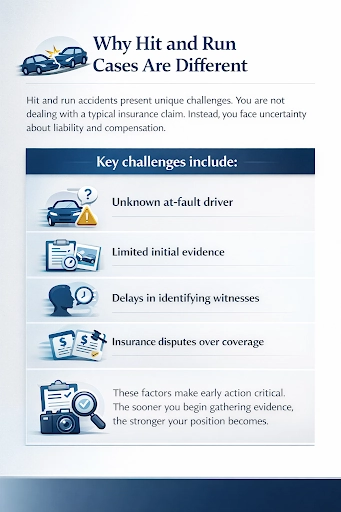
Hit-and-run accidents present unique challenges. You are not dealing with a typical insurance claim. Instead, you face uncertainty about liability and compensation.
Key challenges include:
- Unknown at-fault driver
- Limited initial evidence
- Delays in identifying witnesses
- Insurance disputes over coverage
These factors make early action critical. The sooner you begin gathering evidence, the stronger your position becomes.
Common Injuries in Hit and Run Accidents
These crashes often result in serious injuries, especially when victims are caught off guard or struck at high speeds. Common injuries include:
- Traumatic brain injuries
- Spinal cord damage
- Broken bones
- Internal bleeding
- Whiplash and neck injuries
- Cuts, bruises, or burns
Some injuries may not appear right away. Prompt medical care protects your health and creates a clear record of your condition.
What to Do After a Hit and Run Accident
Your actions after a hit-and-run accident can affect your ability to recover compensation. Even if the driver has left the scene, you can still take steps to protect your claim.

In the Days Following the Accident
As your situation stabilizes, take steps to support your claim:
- Follow all medical treatment plans
- Keep records of your symptoms and recovery
- Notify your insurance company
- Request a copy of the police report
Avoid giving detailed statements without preparation. Early statements can affect how your claim is evaluated.
In the Weeks Ahead
Your focus should shift to building a strong case:
- Track all medical expenses and lost income
- Document how your injuries affect daily life
- Preserve all communication with insurers
- Review any settlement offers carefully
Patience is key. Quick settlements often fail to reflect the full impact of your injuries.
How Compensation Works in Hit and Run Cases
Even if the driver is not found, you may still recover compensation. Florida drivers often carry uninsured motorist (UM) coverage, which can apply in hit-and-run situations.
You may be able to recover compensation for:
- Medical bills for current and future treatment
- Lost wages from time off work
- Reduced earning ability due to injury
- Property damage to your vehicle
- Pain and suffering from your injuries
- Emotional distress caused by the accident
- Loss of enjoyment of daily life
The value of your claim depends on the severity of your injuries and how they affect your daily routine.
How the At-Fault Driver May Be Identified
Not all hit-and-run drivers remain unknown. With the right approach, it may be possible to locate the person responsible.
Methods used to identify drivers include:
- Reviewing traffic camera footage
- Analyzing nearby surveillance video
- Interviewing witnesses
- Examining vehicle debris left at the scene
- Working with accident reconstruction professionals
Even if identification takes time, building your case early helps preserve key evidence.
How Legal Representation Helps Your Claim
A hit-and-run case requires structure and direction. Without it, you may face delays, denied claims, or reduced compensation.
Build a Strong Foundation
A structured case begins with early action:
- Secure police reports and medical records
- Identify potential witnesses
- Preserve video footage before it is lost
- Document the scene and damage
This foundation supports every step that follows.
Manage Insurance Communication
Insurance companies aim to limit payouts. You may face questions, requests for statements, or early settlement offers.
Legal guidance helps:
- Control communication with adjusters
- Avoid statements that may harm your claim
- Evaluate settlement offers before acceptance
A clear strategy keeps your claim on track.
Calculate the Full Value of Your Claim
Your losses may extend beyond immediate expenses. A complete evaluation considers both current and future impact.
This includes:
- Ongoing medical care
- Long-term recovery needs
- Lost earning potential
- Daily limitations caused by your injuries
A full assessment helps ensure nothing is overlooked.
Prepare for Litigation if Needed
While many claims resolve through negotiation, some require legal action. Preparation strengthens your position.
This may involve:
- Filing a lawsuit within legal deadlines
- Gathering expert testimony
- Presenting evidence in court
Strong preparation often leads to better outcomes, even before trial.
Florida Laws That Affect Your Case
Florida law requires drivers to stop after an accident and provide assistance. Leaving the scene can result in serious legal consequences for the at-fault driver.
From a civil standpoint, you must also be aware of deadlines. Florida generally sets a two-year limit for filing personal injury claims. Missing this deadline may prevent recovery.
Acting early helps protect your rights and allows time to build a strong case.
Avoid Costly Mistakes After a Hit-and-Run
Certain actions can weaken your claim. Avoid these common mistakes:
- Delaying medical treatment
- Failing to report the accident
- Giving recorded statements too soon
- Accepting early settlement offers
- Posting details about the accident online
Consistency and documentation support your claim. Every step you take should strengthen the connection between the crash and your injuries.
Frequently Asked Questions About Hit and Run Accidents
After a hit-and-run accident, you may have urgent questions about your rights and next steps.
Can I recover compensation if the driver is never found?
Yes. You may still recover compensation through your uninsured motorist coverage. This type of policy is designed to protect you when the at-fault driver cannot be identified. A clear presentation of your injuries and losses helps support your claim.
How long do I have to file a claim in Florida?
Florida generally allows two years from the date of the accident to file a personal injury claim. Acting early helps preserve evidence and strengthens your position. Delays can make it harder to gather witness statements or locate surveillance footage.
What if I only remember part of the vehicle details?
Partial information can still be useful. Details such as color, make, or even a portion of the license plate may help identify the driver. Combined with surveillance footage or witness accounts, these details can support an investigation.
Will my insurance rates increase if I file a claim?
Filing a claim under uninsured motorist coverage does not automatically mean your rates will increase. However, policies vary. It is important to review your coverage and understand how your insurer handles these claims before proceeding.
Speak With a Clearwater Hit and Run Accident Lawyer Today
A Clearwater hit-and-run accident lawyer can help you take control of your situation and pursue compensation after a serious crash. Acting quickly helps preserve evidence and strengthens your claim.
Call Light & Wyatt Law Group at 727-499-9900 for a consultation today.